



The TCVN 7387 series consists of four parts, including TCVN 7387-1:2004 – Safety of Machinery – Permanent Means of Access to Machinery – Part 1: Choice of Fixed Means of Access Between Two Levels.
This standard provides guidance on the selection of fixed ladders, step ladders, stairways, and ramps, as well as the hazards that may be encountered when using these means of access. The following are the principal contents of the standard.
National Standard
TCVN 7387-1:2004
ISO 14122-1:2003
Safety of Machinery – Permanent Means of Access to Machinery – Part 1: Choice of Fixed Means of Access Between Two Levels
Foreword
TCVN 7387-1:2004 is identical to ISO 14122-1:2001.
It was prepared by the TCVN/SC 1 Technical Committee on General Mechanical Engineering, proposed by the Directorate for Standards, Metrology and Quality, and promulgated by the Ministry of Science and Technology.
In 2008, this standard was converted from a Vietnamese Standard into a National Standard in accordance with Clause 1, Article 69 of the Law on Standards and Technical Regulations, and Point a, Clause 1, Article 6 of Government Decree No. 127/2007/ND-CP dated August 1, 2007, detailing the implementation of several provisions of the Law on Standards and Technical Regulations.
1 Scope
This standard specifies the general requirements for the safe access to machinery as referred to in EN 292-2. It provides guidance for selecting appropriate means of access where direct access to machinery from the ground or floor level is not possible.
This standard applies to all machinery, whether stationary or mobile, requiring permanent means of access. It applies to access systems that form part of the machinery.
It also applies to access systems forming part of a building structure, such as working platforms, walkways, or stairways, where their primary function is to provide access to machinery.
NOTE: This standard may also be applied to access systems outside its scope where appropriate, provided that relevant Vietnamese standards and other applicable regulations are taken into consideration.
This standard also applies to machinery-specific access systems that are not permanently attached to the machine and may be removed or moved aside during certain machine operations, such as tool replacement on large presses.
This standard does not apply to lifts, elevating platforms, or other equipment specifically designed to transport persons between different levels.
2 Normative References
This standard refers to the following standards:
- TCVN 7383-1:2004 (ISO 12100-1) – Safety of Machinery – Basic Concepts, General Principles for Design – Part 1: Basic Terminology and Methodology.
- TCVN 7383-2:2004 (ISO 12100-2) – Safety of Machinery – Basic Concepts, General Principles for Design – Part 2: Technical Principles.
- TCVN 7301:2003 (ISO 14121) – Safety of Machinery – Principles for Risk Assessment.
- EN 1070 – Safety of Machinery – Terminology.
- EN ISO 14122-2 – Working Platforms and Walkways.
- EN ISO 14122-3 – Stairs, Stepladders and Guardrails.
- EN ISO 14122-4 – Fixed Ladders.
3 Terms and Definitions
For the purposes of this standard, the definitions given in EN 1070 and the following apply.
3.1 Ladder
A fixed means of access with an inclination angle greater than 75° and up to 90°, consisting of horizontal rungs.
3.2 Step Ladder
A fixed means of access with an inclination angle greater than 45° and up to 75°, consisting of horizontal steps.
3.3 Stairway
A fixed means of access with an inclination angle greater than 20° and up to 45°, consisting of horizontal steps.
3.4 Ramp
A fixed means of access consisting of a continuous inclined surface with an inclination angle greater than 0° and up to 20°.
4 Major Hazards
The principal hazards associated with the type and location of the access system include:
- Falling from height.
- Slipping.
- Tripping.
- Excessive physical effort, for example, climbing a long series of ladders.
- Falling materials or objects that may pose a risk to personnel.
Other hazards arising from machinery itself—such as moving parts, machine movement, radiation, hot surfaces, noise, steam, hot liquids—or from the surrounding environment, such as hazardous airborne substances, are outside the scope of this standard. Nevertheless, machine designers should take these hazards into account by implementing appropriate protective measures, including restricting access where necessary.
NOTE: EN 1050 provides the principles for risk assessment.
This standard primarily aims to prevent falls from height and excessive physical exertion.
5 Requirements for the Selection of Fixed Means of Access
5.1 General Requirements
Safe and convenient means of access shall be provided for all areas and points of the machine that require access throughout the machine's service life.
5.2 Preferred Means of Access
The preferred order of access is:
a) Direct access from ground level or floor level;
b) Passenger lifts, ramps, or stairways;
c) Step ladders or fixed ladders.
5.3 Selection of Means of Access
Basic Principle
Whenever possible, access to controls and other machine components should be provided directly from the ground or floor level. This is particularly important where frequent access is required.
Where this is not possible, the preferred solutions are:
- Passenger lifts;
- Ramps with an inclination of less than 10°; or
- Stairways with an inclination between 30° and 38°.
These options should always be considered the safest and most appropriate means of access.
Selection of Step Ladders or Fixed Ladders
The use of step ladders and fixed ladders should be avoided wherever possible because they present a higher risk of falls and require greater physical effort.
They should only be considered after a comprehensive risk assessment, including ergonomic considerations.
Typical situations where step ladders or fixed ladders may be appropriate include:
- Short vertical access distances.
- Infrequent use.
- Users are not required to carry large tools or equipment.
- Only one person uses the access system at a time.
- The access route is not intended for emergency evacuation.
- The machine design makes safer access methods impractical (for example, tower cranes or mobile machinery).
If the assessed risk remains unacceptable, the machinery or access system should be redesigned to permit the use of safer alternatives, such as stairways or ramps.
Contact information
ISO SOLUTIONS & ISO SAFE PRO CO., LTD
Related articles

RACKING SAFETY – BUILT FOR SAFE WAREHOUSE OPERATIONS
Early Detection of Damage – Risk Control – Safe Warehouse Operations Warehouse racking systems are continuously exposed to forklift impacts, heavy loads and daily operations . Damage such as bent or twisted uprights, deformed beams, loose connections, or overloaded storage can increase the risk of falling goods, property damage, and unsafe warehouse conditions .
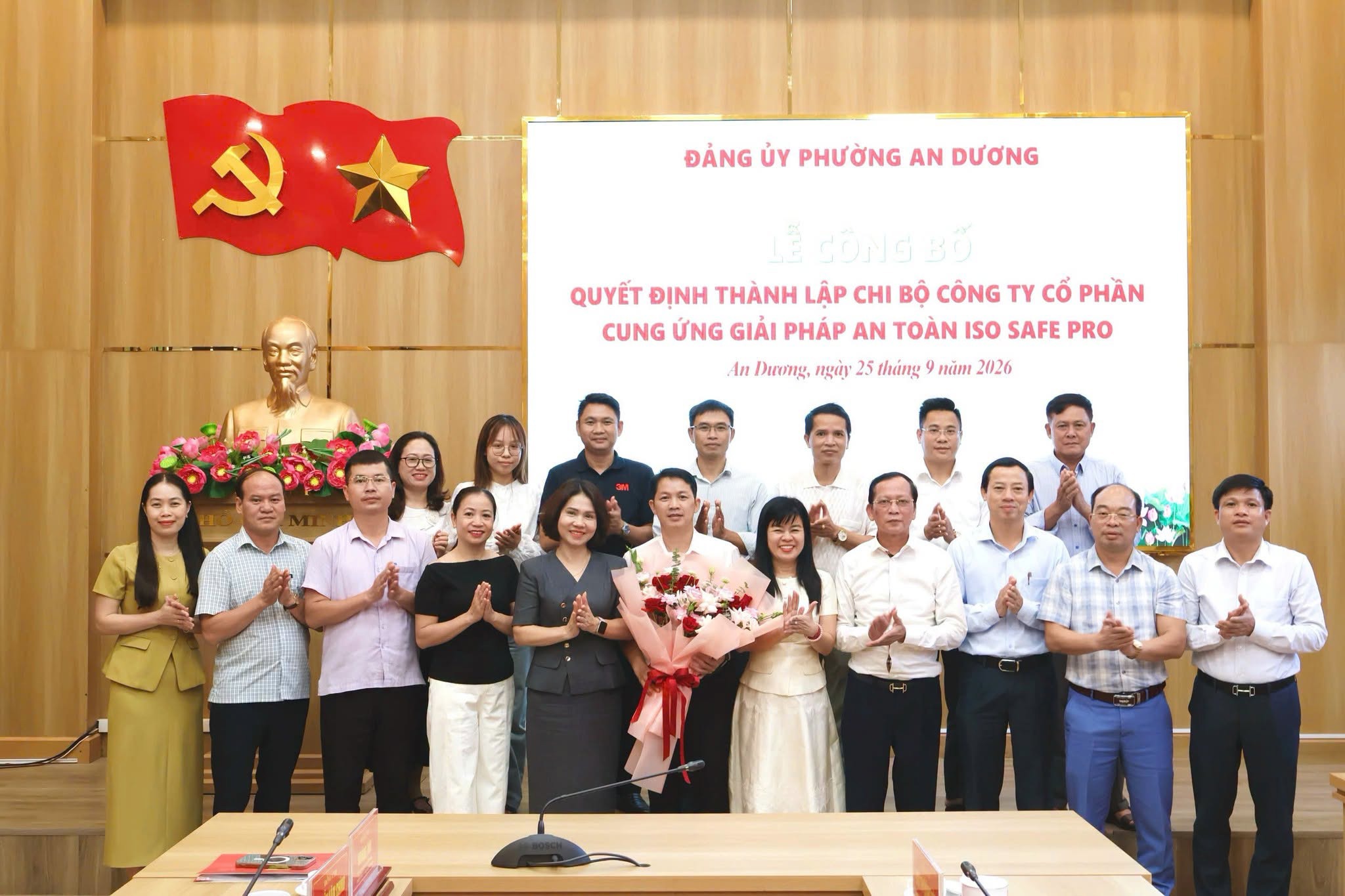
AN DUONG WARD ESTABLISHES THE PARTY CELL OF ISO SAFE PRO SAFETY SOLUTIONS JOINT STOCK COMPANY
On the afternoon of September 25, the An Duong Ward Party Committee announced the establishment of the Party Cell of ISO Safe Pro Safety Solutions Joint Stock Company, comprising four Party members and marking a new milestone in Party organization development within the enterprise.
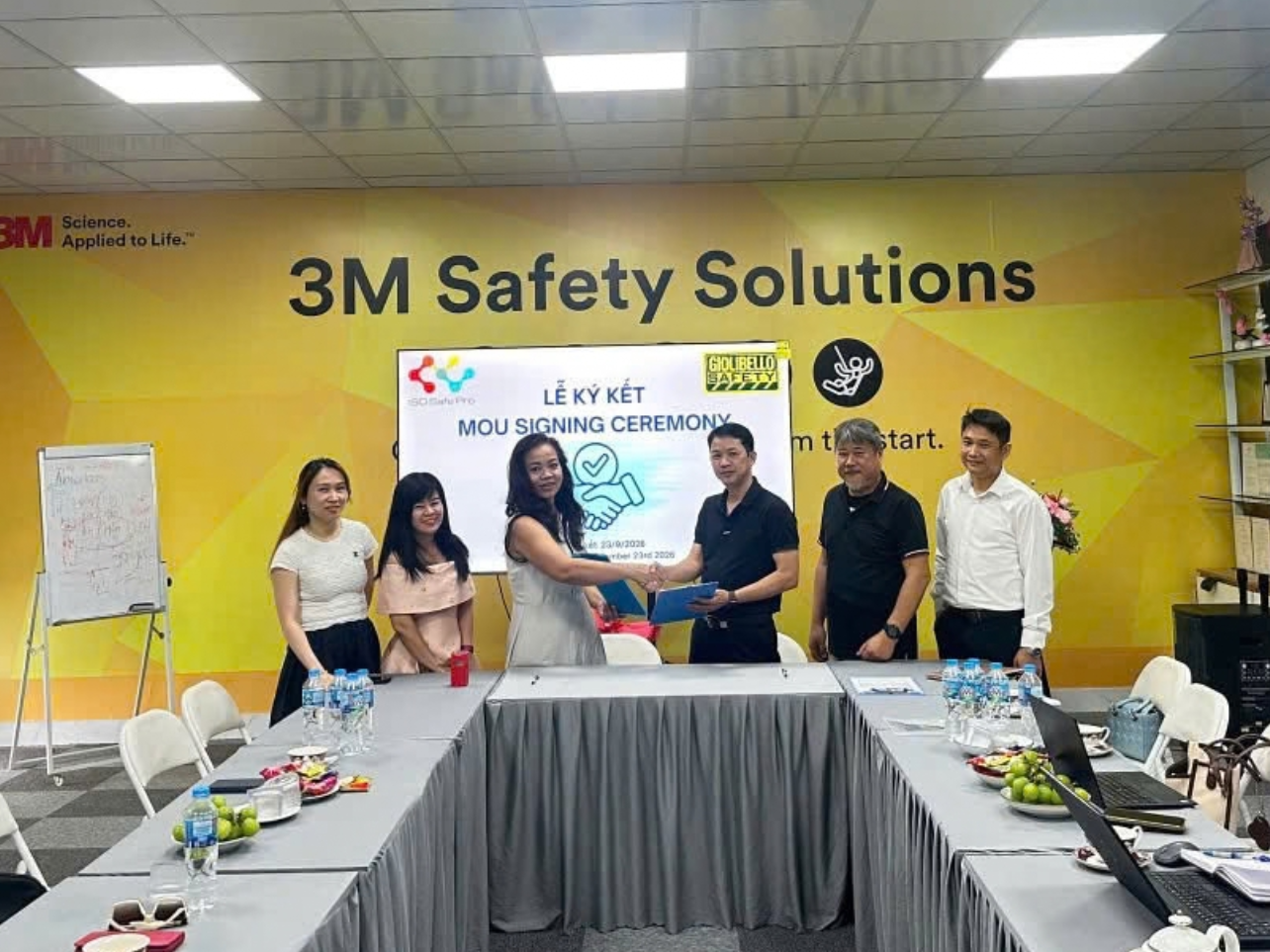
ISO SOLUTIONS & ISO SAFE PRO × GIOLIBELLO STRATEGIC PARTNERSHIP FOR SAFETY FOOTWEAR DEVELOPMENT
ISO Solutions & ISO Safe Pro partner with Giolibello to develop safety footwear tailored to specific industries, workplace risks, and the practical needs of Vietnamese workers, aiming to deliver more practical, safer, and better-suited PPE solutions for the Vietnamese market.