



Importance of TCVN 7387-3:2011 (ISO 14122-3:2011) for Employees and Employers
1. Importance for Employees
TCVN 7387-3:2011 (ISO 14122-3:2011) specifies the safety requirements for stairs, stepladders, and guard-rails, which are permanent means of access to machinery commonly used in industrial workplaces. Implementing this standard provides direct benefits to employees:
- Reduces the risk of accidents: Properly designed stairs, stepladders, and guard-rails help minimize the risk of slips, trips, and falls when accessing machinery or elevated work areas.
- Protects health and well-being: Adequate dimensions and robust construction reduce physical strain and help prevent fatigue and injuries caused by improper working postures.
- Improves working conditions: A safer working environment allows employees to perform their tasks with greater confidence, resulting in improved productivity and reduced stress.
2. Importance for Employers
Complying with TCVN 7387-3:2011 (ISO 14122-3:2011) not only protects employees but also provides long-term benefits for organizations:
- Ensures legal compliance: Helps organizations meet occupational safety requirements and avoid legal violations or regulatory penalties.
- Reduces the costs associated with workplace accidents: Investing in compliant access systems helps minimize accidents, compensation costs, production interruptions, and financial losses.
- Enhances corporate reputation and image: A safe working environment demonstrates the organization's commitment to employee welfare and strengthens confidence among customers, business partners, and regulatory authorities.
- Improves productivity: Employees who feel safe at work are able to perform more efficiently, contributing to higher productivity and better product quality.
The Standard
National Standard
TCVN 7387-3:2011
ISO 14122-3:2011
Safety of Machinery – Permanent Means of Access to Machinery – Part 3: Stairs, Stepladders and Guard-Rails
Foreword
TCVN 7387-3:2011 is identical to ISO 14122-3:2001, including Amendment 1:2010.
It was prepared by the National Technical Committee TCVN/TC 199 – Safety of Machinery, proposed by the Directorate for Standards, Metrology and Quality, and published by the Ministry of Science and Technology.
The TCVN 7387 (ISO 14122) series consists of:
- TCVN 7387-1:2004 (ISO 14122-1:2001) – Part 1: Choice of Fixed Means of Access Between Two Levels.
- TCVN 7387-2:2007 (ISO 14122-2:2001) – Part 2: Working Platforms and Walkways.
- TCVN 7387-3:2011 (ISO 14122-3:2001) – Part 3: Stairs, Stepladders and Guard-Rails.
- TCVN 7387-4:2011 (ISO 14122-4:2004) – Part 4: Fixed Ladders.
Introduction
This is the third standard in the series "Safety of Machinery – Permanent Means of Access to Machinery."
It is a Type B standard as defined in TCVN 7383-1 (ISO 12100-1).
The provisions of this standard may be supplemented or modified by a Type C machine-specific standard.
NOTE 1: For machinery covered by a Type C standard and designed in accordance with that standard, the requirements of the Type C standard take precedence over those of this Type B standard.
The purpose of this standard is to specify the general requirements for safe access to machinery described in TCVN 7383-2 (ISO 12100-2) and TCVN 7387-1 (ISO 14122-1), providing guidance on selecting appropriate means of access where direct access from ground level or floor level is not possible.
The specified dimensions are based on established ergonomic data given in EN 547-3 – Safety of Machinery – Human Body Measurements – Part 3: Anthropometric Data.
NOTE 2: The use of materials other than metal (such as composite or advanced materials) does not affect the application of this standard.
1 Scope
This standard applies to:
- All stationary and mobile machinery requiring permanent means of access.
- Stairs, stepladders, and guard-rails that form part of machinery.
- Stairs, stepladders, and guard-rails forming part of a building where their primary function is to provide access to machinery.
NOTE 1: This standard may also be applied to means of access outside its scope, provided relevant regulations are taken into consideration.
NOTE 2: Additional requirements may apply to mobile machinery due to their specific dimensions and operating conditions.
This standard also applies to machinery-specific access systems that are not permanently fixed and may be removed or moved aside during certain machine operations (for example, tool changing on a large press).
For significant hazards covered by this standard, refer to Clause 4 of TCVN 7387-1 (ISO 14122-1).
2 Normative References
The following referenced documents are indispensable for the application of this standard. For dated references, only the edition cited applies. For undated references, the latest edition (including amendments) applies.
- TCVN 7383-1:2004 (ISO 12100-1:2003) – Safety of Machinery – Basic Concepts, General Principles for Design – Part 1.
- TCVN 7383-2:2004 (ISO 12100-2:2003) – Basic Concepts, General Principles for Design – Part 2.
- TCVN 7387-1:2004 (ISO 14122-1:2001) – Choice of Fixed Means of Access Between Two Levels.
3 Terms and Definitions
This standard adopts the terms and definitions given in TCVN 7383-1 (ISO 12100-1), TCVN 7387-1 (ISO 14122-1), together with additional definitions including:
- Stair and stepladder
- Climbing height
- Flight
- Going
- Headroom
- Landing
- Walking line
- Overlap
- Pitch line
- Angle of pitch
- Rise
- Step
- Nosing
- String
- Width
- Depth of step
- Clearance
- Guard-rail
- Handrail
- Knee rail
- Toe plate
- Self-closing gate
4 General Safety Requirements
The standard specifies that:
- Materials and structural dimensions shall meet safety objectives.
- Materials shall resist environmental corrosion.
- Components accessible to users shall not present injury hazards such as sharp edges or burrs.
- Steps and landings shall provide effective slip resistance.
- Moving parts such as gates shall not introduce additional hazards.
- Fasteners, supports, hinges, and structural members shall provide adequate strength and rigidity.
- The structure shall withstand the specified design loads.
5 Safety Requirements for Stairs
Key requirements include:
- Stair dimensions shall satisfy:
600 mm ≤ Going + 2 × Rise ≤ 660 mm
- Stair overlap shall be at least 10 mm.
- Rise shall remain uniform throughout each flight.
- The top step shall be level with the landing.
- Stair treads shall provide adequate slip resistance.
- Structural members shall meet prescribed load and deflection requirements.
Contact information
ISO SOLUTIONS & ISO SAFE PRO CO., LTD
Related articles

RACKING SAFETY – BUILT FOR SAFE WAREHOUSE OPERATIONS
Early Detection of Damage – Risk Control – Safe Warehouse Operations Warehouse racking systems are continuously exposed to forklift impacts, heavy loads and daily operations . Damage such as bent or twisted uprights, deformed beams, loose connections, or overloaded storage can increase the risk of falling goods, property damage, and unsafe warehouse conditions .
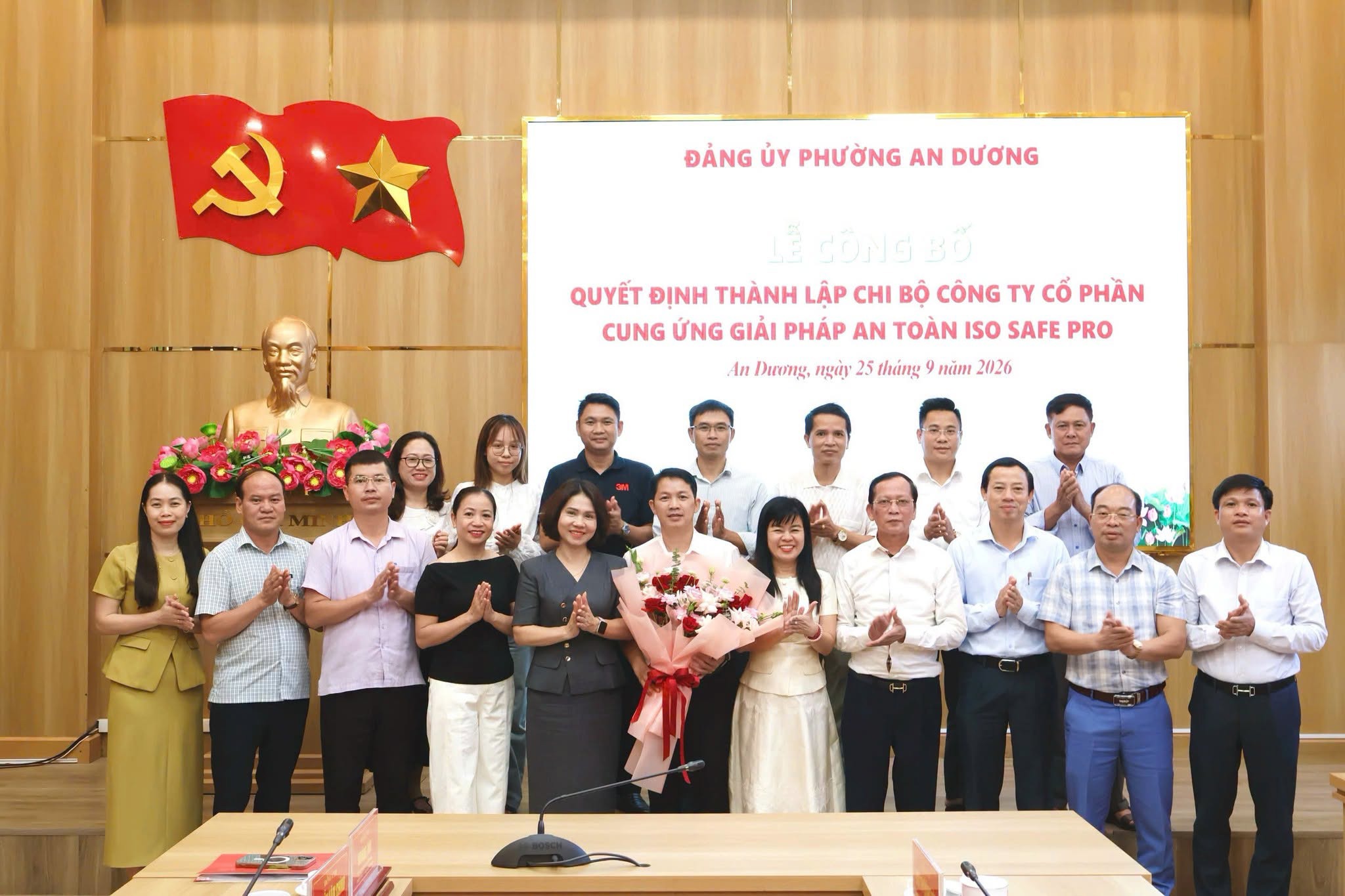
AN DUONG WARD ESTABLISHES THE PARTY CELL OF ISO SAFE PRO SAFETY SOLUTIONS JOINT STOCK COMPANY
On the afternoon of September 25, the An Duong Ward Party Committee announced the establishment of the Party Cell of ISO Safe Pro Safety Solutions Joint Stock Company, comprising four Party members and marking a new milestone in Party organization development within the enterprise.
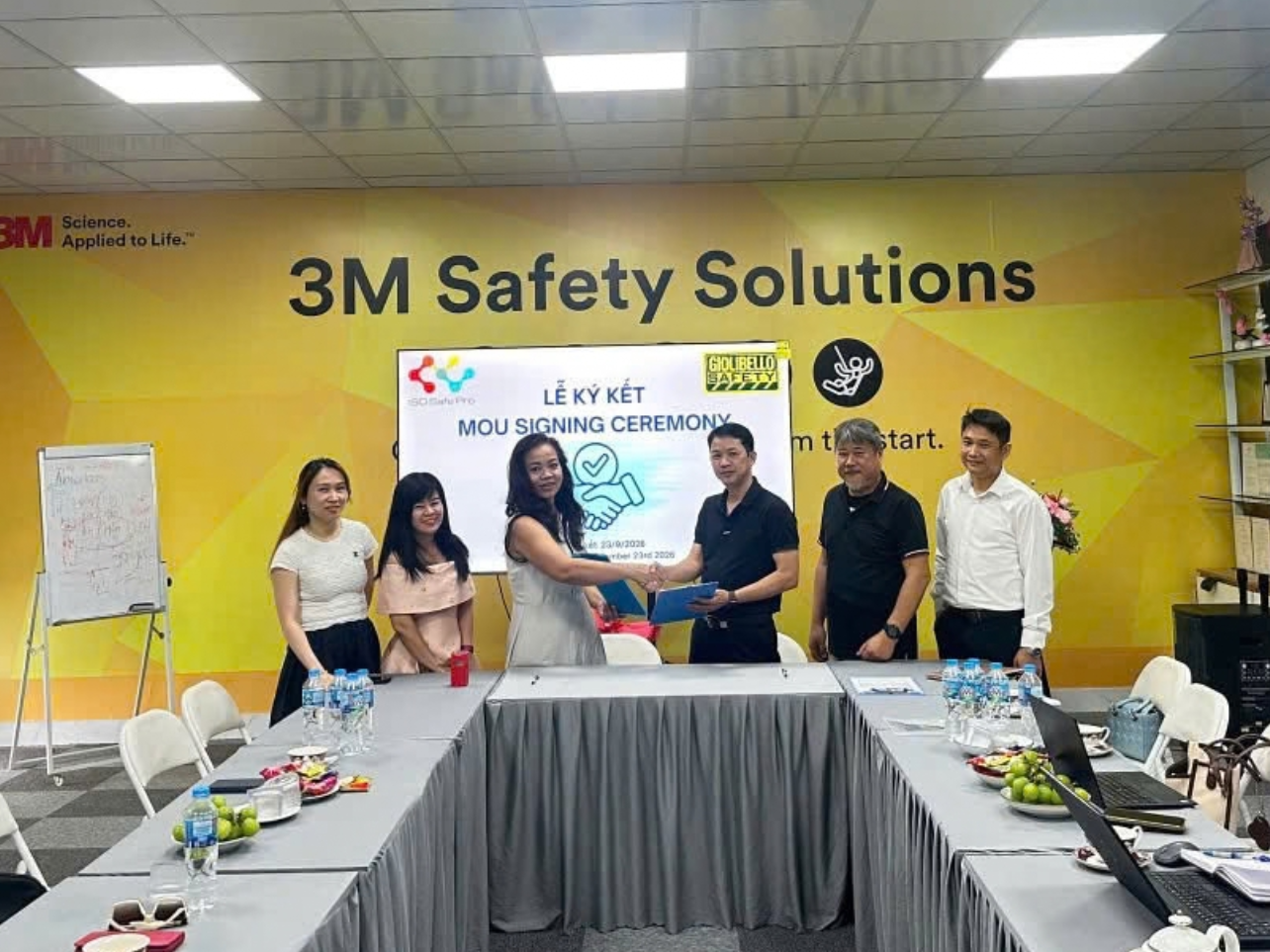
ISO SOLUTIONS & ISO SAFE PRO × GIOLIBELLO STRATEGIC PARTNERSHIP FOR SAFETY FOOTWEAR DEVELOPMENT
ISO Solutions & ISO Safe Pro partner with Giolibello to develop safety footwear tailored to specific industries, workplace risks, and the practical needs of Vietnamese workers, aiming to deliver more practical, safer, and better-suited PPE solutions for the Vietnamese market.