


Effective January 1, 2027, Circular No. 27/2026/TT-BNV replaces Circular No. 06/2020/TT-BLĐTBXH concerning the list of occupations subject to strict occupational safety and health requirements.
Updating this list is important for businesses when reviewing job positions, identifying workplace hazards, and organizing occupational safety and health training appropriate to employees’ actual duties.
1. Key Changes to Note
A comparison of the previous and updated lists highlights several notable changes:
-
Construction work: Activities involving construction supervision, site surveys, construction, installation, maintenance, demolition, and operation of construction equipment are organized and specified in greater detail.
-
Chemicals and explosives: The updated list adds activities such as experimentation, testing, and handling of hazardous chemicals, while expanding certain activities involving explosives and explosive accessories.
-
Mechanical engineering and metalworking: Additional machines, equipment, and tasks are specified, including boring, fixed drilling, metal welding and cutting, heat treatment, surface cleaning, and metal processing.
-
Electricity, energy, and advanced technology: The updated list addresses electrical energy storage systems, accumulators, batteries, electronic components, semiconductors, nanomaterials, and advanced materials in greater detail.
-
Work conditions and scope: Certain categories have been revised, with additional conditions or exclusions. Notably, the threshold for regularly handling heavy loads manually has been changed to 20 kg or more, up from 30 kg under the previous list.
The updated list also covers certain occupations in aviation, uncrewed aircraft operation, production systems controlled through screens or robots, and other specialized fields.
2. Detailed Comparison of Category 3 Occupations
The comparison table below presents the corresponding items under Circular No. 06/2020/TT-BLĐTBXH and Circular No. 27/2026/TT-BNV, helping businesses identify the relevant changes.
COMPARISON TABLE OF CATEGORY 3 OCCUPATIONS
Circular No. 06/2020/TT-BLĐTBXH (Previous List) and Circular No. 27/2026/TT-BNV (Updated List)
|
No. |
Circular No. 06/2020/TT-BLĐTBXH (Previous List) |
Circular No. 27/2026/TT-BNV (Updated List) |
|
1 |
Manufacturing, assembling, operating, maintaining, repairing, dismantling, inspecting, and conducting occupational safety technical inspections of, or supervising the operation of, machinery and equipment included in the list issued by the Ministry of Labor, Invalids and Social Affairs. |
Manufacturing, assembling, operating, maintaining, repairing, dismantling, inspecting, and conducting occupational safety technical inspections of, or supervising the operation of, machinery and equipment subject to mandatory occupational safety technical inspection. |
|
2 |
Directly producing, using, storing, or transporting hazardous or toxic chemicals classified under the Globally Harmonized System of Classification and Labeling of Chemicals (GHS). |
Directly producing, using, conducting experiments or tests with, storing, transporting, or handling hazardous or toxic chemicals classified under GHS. |
|
3 |
Testing, producing, using, storing, or transporting explosives and explosive accessories. |
Conducting experiments, chemical analyses, or tests involving explosives and explosive accessories; producing, using, storing, repairing, transporting, or handling them. |
|
4 |
Operating, maintaining, repairing, dismantling, inspecting, or supervising listed construction machinery, including power hammers, dredging machines, pumps, mortar/concrete mixers and sprayers, concrete grinding/cutting/texturing machines, demolition machines, handheld drills, batching plants, crushing/screening plants, earthmoving and compaction machinery; operating dump trucks with payload over 5 tonnes. |
Construction supervision and surveying; construction, installation, repair, renovation, relocation, restoration, rehabilitation, demolition, maintenance, commissioning and trial operation; scaffolding erection; manual prying, breaking, digging and excavation at construction sites or mines. Also operating, maintaining, repairing, dismantling, inspecting o, or supervising power hammers, dredging machines, mortar/concrete mixing, pumping and spraying equipment, concrete texturing/milling/paving machines, demolition machines, handheld/tunnel drills, earthmoving and compaction machinery, and concrete batching plants. |
|
5 |
Directly assembling, operating, repairing, maintaining or cleaning grinding, sawing, milling, planing, turning, bending, splitting, cutting, chopping, punching, stamping, chiselling, crushing, forming, feeding/discharging, mixing, rolling, centrifuging, drying, screening, sorting, pressing, paper-forming, sheet-metal bending, coating, winding, peeling and bagging machines; hydraulic jacks; polishing/sanding machines; conveyors; water-blasting/pneumatic guns; industrial printing machines. |
Directly assembling, operating, repairing, maintaining or cleaning grinders, saws, milling/planing/turning/boring/fixed-drilling machines; bending, splitting, cutting, trimming, chopping, punching, stamping, chiselling, crushing, forming, feeding/discharging, mixing, rolling, centrifuging, drying, screening, sorting, pressing, paper-forming, sheet-metal bending, coating, winding, peeling and bagging equipment; hydraulic jacks; metal welding/cutting equipment; polishing/sanding machines; conveyors; high-pressure industrial water-blasting/pneumatic guns; industrial printing machines. Directly performing pickling, plating, painting, heat treatment, surface cleaning , or metalworking. |
|
6 |
Directly making casting molds; smelting and casting; cleaning/plating metal surfaces; metal processing; ore/coke processing; working at rotary cement kilns, refractory furnaces/combustion chambers, and calcium carbide furnaces; operating, repairing, inspecting, supervising, feeding or removing products/waste from roasting, firing, and smelting furnaces. |
Directly making casting molds, smelting and casting; ore/coke processing; working at rotary cement kilns, firing furnaces or combustion chambers; operating, repairing, inspecting, supervising, feeding or removing products/waste from firing, combustion, roasting or smelting furnaces. |
|
7 |
Working at heights of 2 meters or more above the working surface, on mobile work platforms, or in dangerous and precarious locations. |
Working at heights of 2 meters or more, on mobile work platforms, in dangerous/precarious locations, on roofs or construction slopes (taluy), or on ship-launching ways. |
|
8 |
Working on rivers, at sea, on water surfaces, or offshore platforms; diving/supervising diving; manufacturing, building, operating, repairing, maintaining, or inspecting machinery/equipment in ship holds and watercraft. |
Same as previous list: working on rivers, at sea, on water surfaces or offshore platforms; diving/supervising diving; manufacturing, building, operating, repairing, maintaining,g or inspecting machinery/equipment in ship holds and watercraft. |
|
9 |
Working with ionizing radiation, radioactive or nuclear materials; operating scanning, irradiation, or imaging equipment using nuclear radiation or electromagnetic fields. |
Working with ionizing radiation, radioactive or nuclear materials; operating scanning, irradiation,n or imaging equipment using nuclear radiation or electromagnetic fields; working with high-frequency electromagnetic fields at frequencies of 3 kHz orabovee and maritime communication/control equipment. |
|
10 |
Working with high-frequency electromagnetic fields at frequencies of 3 kHz or above. |
Directly researching, designing, manufacturing, assembling, inspecting, testing,maintaininga,ining or repairing electronic components; directly researching, manufacturing,producingd,ucing or processing semiconductors,nanomaterialses and advanced materials. |
|
11 |
Forest planning/investigation; geological, topographical, marine field and geophysical surveys; surveying, prospecting, extracting and processing minerals and oil/gas; manufacturing, using, operating, maintaining or repairing structures/equipment for mineral and oil/gas extraction and petroleum operations onshore/offshore. |
Forest planning/investigation; geological, topographical, marine field and geophysical surveys; surveying, prospecting, extracting and processing minerals and oil/gas. |
|
12 |
Construction work: supervision, surveying, construction/installation, repair, renovation, relocation, restoration,rehabilitationi,litation and demolition; warranty/maintenance; commissioning and trial operation. |
Working in confined spaces or areas where toxic gases may arise, such as tunnels, shafts, tanks, wells, sewers, underground structures, and cold storage; operating/maintaining gas pipelines; industrial/environmental/livestock-facility cleaning; wastewater, rubbish,h and waste collection,transporto, rt and treatment; sewer unblocking (excluding households that do not employ workers). |
|
13 |
Working in confined spaces or areas where toxic gases may arise, including tunnels, shafts, tanks, wellsewe rsers and underground structures; operating/maintaining gas pipelines; industrial/environmental/livestock-facility cleaning; wastewater/rubbish treatment and sewer unblocking. |
Construction, assembly, operation, maintenance, repair, testingexperimentationon, and safety inspection of electrical equipment, power lines, turbines, power plants, battery-charging stations, and energy-conversion/storage systems; manufacturingprocessi ngng, and recycling of accumulators and batteries. |
|
14 |
Operating, maintaining,repairingn,g and testing electrical equipment, powerlinese,s and power plants; safety inspection; operating battery-charging stations; repairing/maintaining accumulators. |
Directly operating, maintaining, ing or repairing trains/electric trains; driving, repairing, ing or maintaining motor vehicles, excluding household use without employees and vehicles not used for business. |
|
15 |
Metal welding and cutting. |
Operating, maintaining, repairing, dismantling, inspe,cting or supervising crushing/screening plants; directly producing or processing construction materials, ceramics, porcelain, ,glass and plastics. |
|
16 |
Directly operating trains/electric trains; driving, repairing, or servicing motor vehicles of all types. |
Professional rescue and emergency response work. |
|
17 |
Directly producing or processing construction materials, ceramics, porcelain, glass, and plastics. |
Directly processing leather and feathers; directly assembling, operating, repairing, maintaining, inspectin,g or supervising cotton-opening, carding, drawing, spinning, weaving, sizing, dyeing, textile-printin,g and winding machines; manual dyeing; directly processing silk in production lines. |
|
18 |
Professional rescue and emergency response work. |
Directly chopping, saw,ing and splitting wood; logging and wood processing (excluding household activities); regularly manually handling heavy loads of 20 kg or more (excluding households without employees). |
|
19 |
Directly processing leather and feat,ers; dy, anding; silk processing. |
Directly cooking/preparing food in collective kitchens serving at least 300 meals per day. |
|
20 |
Directly chopping, sawing, and splitting industrial timber; logging/industrial wood processing; regularly manually handling heavy loads of 30 kg or more. |
Medical examination/treatment; caring for patients and persons with severe or particularly severe disabilities in medical, social protection and nursing facilities (excluding healthcare workers in workplace medical units); pathological anatomy, forensic examination, microbiological, biochemical and toxicological testing. |
|
21 |
Directly cooking/preparing food in collective kitchens serving at least 300 meals per day. |
Drug testing/manufacturing; compounding anduse ofg cancer-treatment medicines;preservation ofg genetic resources and microbial/parasitic strains; environmental disinfection/sterilization; food inspection and sterilization. |
|
22 |
Medical examination/treatment; caring for persons with disabilities and patients; pathological anatomy, forensic examination, microbiological testing; pharmaceutical work. |
Directly slaughtering animals; caring for/raising large animals, livestock, and poultry at production/business facilities; breeding/training service dogs, wild animals, snakes, and crocodiles; disposing of diseased animals (excluding households without employees). |
|
23 |
Veterinary drug testing/manufacturing; preserving genetic resources and microbial/parasitic strains; environmental disinfection/sterilization; food inspection/sterilization. |
Directly operating petrol, diesel, or LPG pumping systems; repairing fuel tanks/storage vessels; receiving, delivering, wholesaling, or retailing petroleum products. |
|
24 |
Directly slaughtering animals and caring for/raising large animals at production/business facilities; breeding/training service dogs, wild animals, snak,es and crocodiles; disposing of diseased animals. |
Directly processing natural rubber latex and turpentine. |
|
25 |
Directly operating petrol, die,sel or LPG pumping systems; repairing fuel tanks/storage vessels; receiving, delivering, wholesal,ing or retailing petroleum products. |
Directly operating production/processing of beer, alcoholic beverages, soft drinks, tobacco, edible oils, confecti,onery and milk (excluding households without employees). |
|
26 |
Directly processing natural rubber latex and turpentine. |
Circus and animal-circus performers; professional athletes/coaches in extreme sports, gymnastics, martial arts, weightl,ifting and swimming. |
|
27 |
Directly operating production/processing of beer, alcoholic beverages, soft drinks, tobacco, edible oils, confec,tionery and milk. |
Working with air traffic control equipment; controlling/guiding/towing/pushing aircraft; managing/supervising ground operations in aircraft movement or restricted areas; inspecting/maintaining/repairing air navigation systems; operatinguncrewedd aircraft; operating, controlling, maintaining, repairing, or troubleshooting machinery, equipmen,t or production lines via screens or robots. |
|
28 |
Circus and animal-circus performers; professional athletes and professional sports coaches. |
Directly performing cremation or burial work. |
|
29 |
Working with computer-screen equipment, including air traffic control and remote operation/control through screens. |
Directly operating motorized agricultural machinery, including harvesters, threshers, reapers, harrows, tree-cutting machin,es and pesticide sprayers (excluding households without employees). |
|
30 |
Directly performing cremation or burial work. |
Operating, maintaining, repairing, dismantling, inspecting, or supervising pumping stations or pumps (excluding households without employees). |
|
31 |
Specialized military occupations included in the list of arduous, hazardous, dangerou,s or particularly arduous, hazardou,s and dangerous occupations. |
Specialized military and police occupatioare ns included in the list of arduous, hazardous, danger,ous or particularly arduous, hazard,ous and dangerous occupations. |
|
32 |
Directly operating motorized agricultural machinery, including threshers, reapers, harrows, lawn mowers, pesticide sprayers, and water pumps. |
No corresponding item is shown in the updated-list column in the source table. |
Translation note: Translated from the supplied source table. Item 32 in the updated-list column is blank in the source document.
3. What Should Businesses Prepare?
Before the Circular takes effect, businesses should:
-
Review their actual job duties and work positions.
-
Compare current work activities against the updated list.
-
Update records identifying employees who require occupational safety and health training.
-
Review training plans, training content, and related management records.
The review should be based on actual work activities and applicable regulations, rather than relying solely on job titles or positions shown in the organizational chart.
4. Conclusion
Circular No. 27/2026/TT-BNV is an important regulatory document that businesses should review in preparation for its implementation on January 1, 2027.
ISO Solutions recommends that businesses carefully compare the previous and updated lists, identify the changes relevant to their operations, and proactively prepare their occupational safety and health training activities in accordance with applicable requirements.
ISO Solutions – Supporting businesses in occupational safety and health and the development of HSE capabilities.
Contact information
ISO SOLUTIONS & ISO SAFE PRO CO., LTD
Related articles
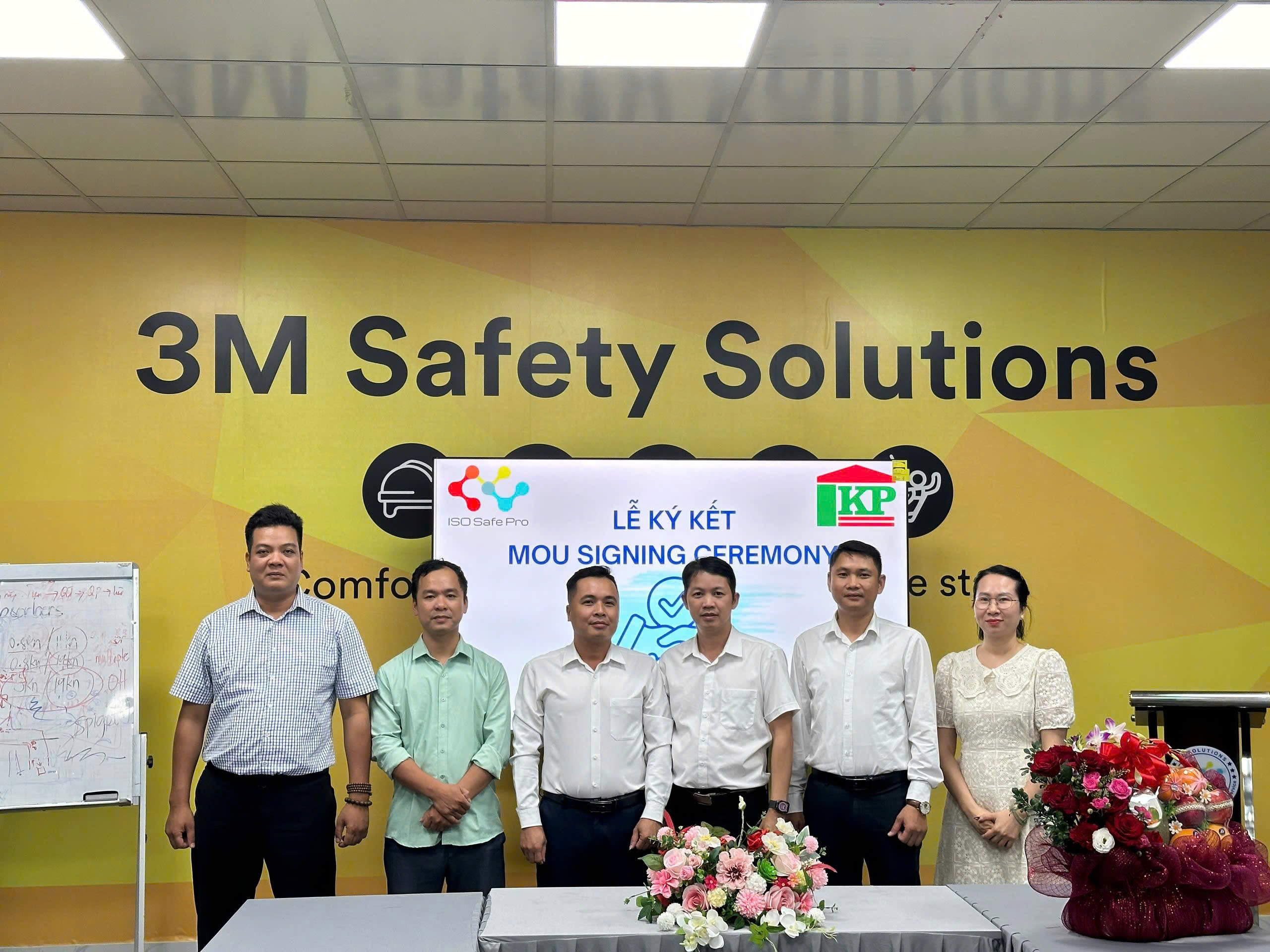
ISO SAFE PRO AND KHAI PHUC ART SIGN MoU TO DEVELOP SAFETY SIGNAGE AND VISUAL IDENTIFICATION SOLUTIONS
SO Safe Pro and Khai Phuc have signed a Memorandum of Understanding (MoU), creating opportunities to combine their expertise, develop markets, and provide integrated safety and advertising signage, as well as visual identification solutions for businesses.

UPDATE ON DECREE NO. 283/2026/ND-CP: ADMINISTRATIVE PENALTIES FOR VIOLATIONS IN THE FIELDS OF LABOUR AND OCCUPATIONAL SAFETY AND HEALTH
Decree No. 283/2026/ND-CP officially took effect on September 10, 2026, replacing Decree No. 12/2022/ND-CP. Businesses should review this new legal framework to ensure compliance with regulations on labour, social insurance, and occupational safety and health.
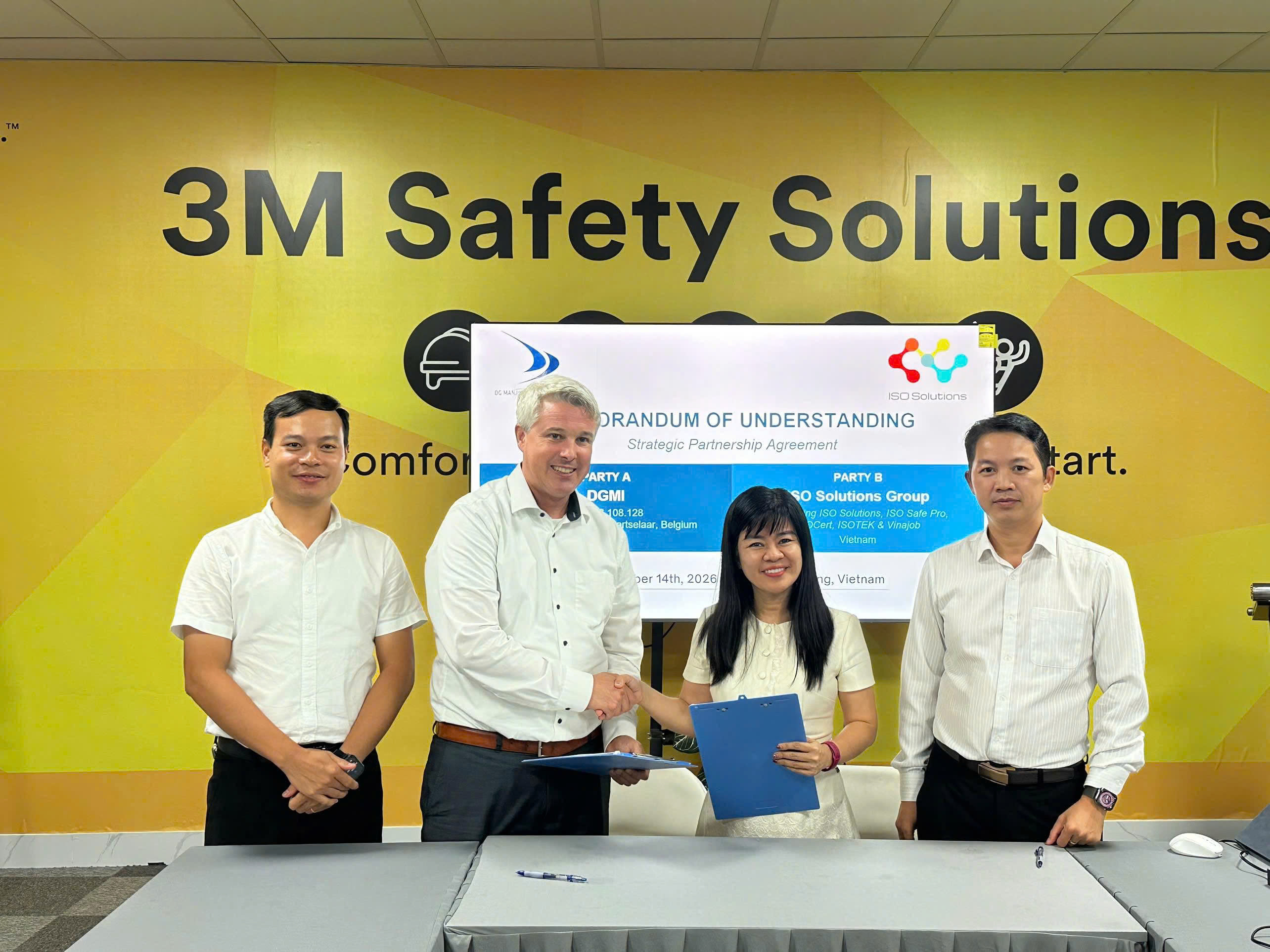
ISO SOLUTIONS GROUP & DGMI / SKILLTEAM – STRENGTHENING PARTNERSHIPS, CONNECTING BUSINESSES AND DEVELOPING CAPABILITIES IN VIETNAM
ISO Solutions Group and DGMI/Skillteam (Belgium) signed an MOU on October 14, 2026, to strengthen business ties, develop digital training, and promote sustainable industrial development in Vietnam.